November 14, 2026
India was the first country to make corporate social responsibility a legal duty for large companies. Since the rule...


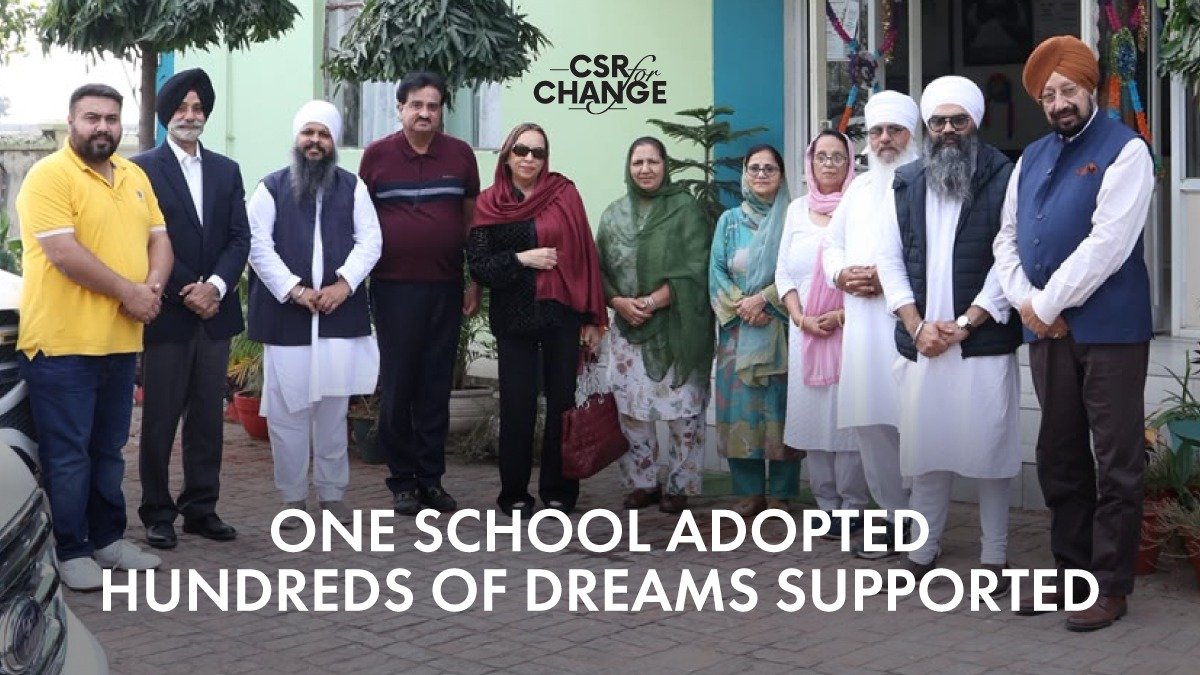
The Vivek Chadha Foundation, a UK charity led by its chairperson G.S. Chadha, has adopted Akal Academy Manoli Surat, a rural CBSE school in Punjab with about 400 students. Although G.S. Chadha and his wife live in London, they have remained closely involved with the school and its students. The foundation’s first step was to share the school’s operating and recurring expenses with Kalgidhar Trust, Baru Sahib, giving the school a stable financial base. It then provided every student with a sports kit, with a good pair of sports shoes at its centre. A basketball court is now under development, and following a recent visit, the foundation has also decided to renovate the school.
Steady support for running costs, combined with a clear focus on sports, defines this NRI education partnership. The foundation looks after the school’s everyday needs while making sure students have the means and the space to play. The approach reflects a well-rounded view of education, in which fitness, teamwork and confidence matter alongside academic results.
Akal Academy Manoli Surat is located in village Manoli Surat, in the Dera Bassi tehsil of Mohali district, Punjab. Established in 2012, this co-educational, English-medium CBSE school now teaches students up to Class 12. Most of its students come from farming families and households that depend on daily wage work in the area.
The school is part of the network of 130 Akal Academies run by Kalgidhar Trust and Kalgidhgar Society, Baru Sahib. Together with 2 universities, these institutions educate more than 75,000 students across five states of North India. As per the rural education programme of Baru Sahib, about 70% of Akal Academy students are the first in their families to go to school.
For families in this area, a school run by an experienced ngo for rural education in India is often the most accessible route to English-medium CBSE education close to home. Support here reaches students who may otherwise have limited access to proper sports equipment, a dedicated playing area or well-maintained classrooms.
The Vivek Chadha Foundation was set up in memory of Vivek Chadha, late son of G.S. Chadha. It is registered with the Charity Commission for England and Wales as a charitable incorporated organisation, with charity number 1211074. Education and support for children and young people are among its stated aims.
G.S. Chadha chairs the foundation and, together with his wife, has been closely involved in the Manoli Surat partnership from the outset. The partnership also carries personal meaning, as the foundation bears the name of his late son. That name is now linked to a campus where hundreds of children study and play every day.
Many families of Indian origin living abroad wish to support education in India but are unsure where to begin. The foundation chose to adopt a school in India through an organisation that already runs schools in rural areas. This ensures that its support reaches students and teachers directly, while the school’s own management handles day-to-day operations.
In adopting Akal Academy Manoli Surat, the foundation took on long-term responsibility for the school and its students. Its support has been planned in stages, beginning with the school’s running costs and then extending to the students, the playground and the school building.
The Vivek Chadha Foundation shares the operating and recurring expenses of Akal Academy Manoli Surat with Kalgidhar Trust, Baru Sahib, under a mutual cost-sharing arrangement. This was the foundation’s first commitment to the school. These are the regular costs that keep a school running through the academic year, and meeting them jointly gives the school a dependable financial base.
Through this mutual sharing of expenses, the school’s everyday needs are met together. The foundation’s contribution is tied to one school and its students, while the Trust continues to manage the school and meet its own share of the costs. With the responsibility shared, the school does not rely on a single source of funding, and students can continue their education without disruption.
Beginning with operating costs reflects a practical understanding of how schools work. Facilities and equipment add value only when classes run regularly and teachers stay with the school. For anyone looking to adopt a school in India from overseas, securing the school’s running costs first and then adding larger projects over time is a sound and sustainable approach.
The idea will be familiar to many donors. Through Educate To Save, individuals sponsor a child’s education at an Akal Academy, one student at a time. The Vivek Chadha Foundation’s commitment at Manoli Surat carries the same spirit to the scale of an entire school, so that all of its students benefit together.
With the running costs secured, the foundation turned its attention to the students. Every student at the school received a sports kit, the most important part of which was a proper pair of sports shoes, along with a tracksuit.
Footwear is often overlooked in school sports, yet it makes a real difference. A good pair of shoes protects young feet on hard and uneven ground, provides grip while running and jumping, and reduces the risk of injury during games. For children from farming families, sports shoes are not always affordable. The kits ensured that every student could take part in games and sports events on equal terms, with no one left out.
The next step is a basketball court, now being developed on the campus. Once complete, it will give students a proper facility to practise a team sport during games periods and after school hours.
In many cases, sports in rural schools are limited to an annual sports day. A permanent court will allow sport to become a regular part of the weekly timetable at Manoli Surat.
Following his recent visit to the academy, G.S. Chadha decided that the foundation would also take up renovation work at the school. With this, the foundation’s support now covers three areas: the school’s running costs, sports equipment for students and the school building itself.
Good play spaces are still missing in many Indian schools. The Ministry of Education’s UDISE+ 2024-25 report shows that 83% of schools in India have a playground, which means about one school in six does not. In many villages, the school ground is the only safe open space where children can play a team sport.
Health guidance supports this. The World Health Organization advises that children and adolescents aged 5 to 17 get at least 60 minutes of moderate to vigorous physical activity a day, on average. India’s National Education Policy 2020 also encourages schools to integrate sports into learning, so that teamwork, discipline and confidence develop alongside academic skills.
This is why investment in sports in rural schools deserves serious attention. A basketball court, a sports kit for every student and a well-maintained building give rural students facilities comparable to those available in many urban schools.
The work at Manoli Surat aligns closely with the United Nations Sustainable Development Goals (SDGs), which UN member countries, including India and the UK, aim to achieve by 2030. Four goals are particularly relevant.
For donors committed to SDG 4 quality education, adopting a school offers a clear, school-level way to contribute to this goal. Kalgidhar Trust, Baru Sahib outlines how its wider work aligns with 15 of the 17 goals on its SDG impact page.
The Vivek Chadha Foundation’s approach offers a practical model for other NRI families and overseas foundations. Begin by visiting the school and meeting the students and teachers. Start with support that benefits every student, such as sports kits, books or uniforms, and then move on to lasting infrastructure such as a court, a laboratory or new classrooms. Share the regular running costs, so that the school’s progress does not depend on any single project. Review the progress on each visit to India and plan the next phase together with the school.
A successful NRI education partnership also depends on choosing the right organisation. It is worth checking how long the organisation has worked in rural areas, how it reports on progress and whether donors are welcome to visit the work. The diligence details and school-level education opportunities on CSR for CHANGE address many of these questions.
Distance need not be a barrier. An established ngo for rural education in India can share regular updates, photographs and reports with donors overseas, so that they remain part of the school’s progress from anywhere in the world. Overseas donors can find more information in the NRIs for Change section.
The Vivek Chadha Foundation, a UK registered charity (charity number 1211074), adopted Akal Academy Manoli Surat. The partnership is led by the foundation’s chairperson, G.S. Chadha, together with his wife.
It means taking long-term responsibility for supporting one school in India. The support can cover operating costs, sports, infrastructure and learning material, depending on what the school needs most. In many ways, it extends the idea of sponsoring one child’s education to every student in a school. At Akal Academy Manoli Surat, the Vivek Chadha Foundation and Kalgidhar Trust, Baru Sahib mutually share the school’s operating and recurring expenses.
The work mainly supports SDG 4 quality education, particularly target 4.a on building and upgrading school facilities. It also supports SDG 3 (Good Health and Well-being) through sports, SDG 10 (Reduced Inequalities) and SDG 17 (Partnerships for the Goals).
The foundation shares the school’s operating and recurring expenses with Kalgidhar Trust, Baru Sahib. It has also provided every student with a sports kit, including sports shoes and a tracksuit. A basketball court is under development, and the foundation has decided to renovate the school following a recent visit.
G.S. Chadha is the chairperson of the Vivek Chadha Foundation, which was set up in memory of his late son, Vivek Chadha. He lives in London and leads the foundation’s work with Akal Academy Manoli Surat.
The school is in village Manoli Surat, Dera Bassi tehsil, Mohali district, Punjab. It is a CBSE school established in 2012, with about 400 students.
Its projects for the students, a sports kit for every child and a basketball court, both centre on sports. Regular physical activity builds fitness, teamwork and confidence, and in many villages the school ground is the only safe place for children to play a team sport.
The Vivek Chadha Foundation’s work at Akal Academy Manoli Surat shows how an NRI education partnership can strengthen a rural school in a planned and lasting way. Under the guidance of its chairperson G.S. Chadha, the foundation began by sharing the school’s operating and recurring expenses with Kalgidhar Trust, Baru Sahib. It then provided sports kits and shoes to 400 students, and is now developing a basketball court and renovating the school. Each step has been shaped by a close understanding of the school and its needs.
CSR for CHANGE is an initiative supporting the noble cause of Kalgidhar Baru Sahib. It helps NRIs and overseas families of Indian origin adopt a school in India, as the Vivek Chadha Foundation has done from London. For those living abroad who wish to give back to their roots, adopting a rural school is one of the most lasting ways to do so. Support can begin with something as simple as sports kits or a playground and grow over time. To adopt an Akal Academy in your own name or in memory of a loved one, connect with CSR for CHANGE for school sponsorship.
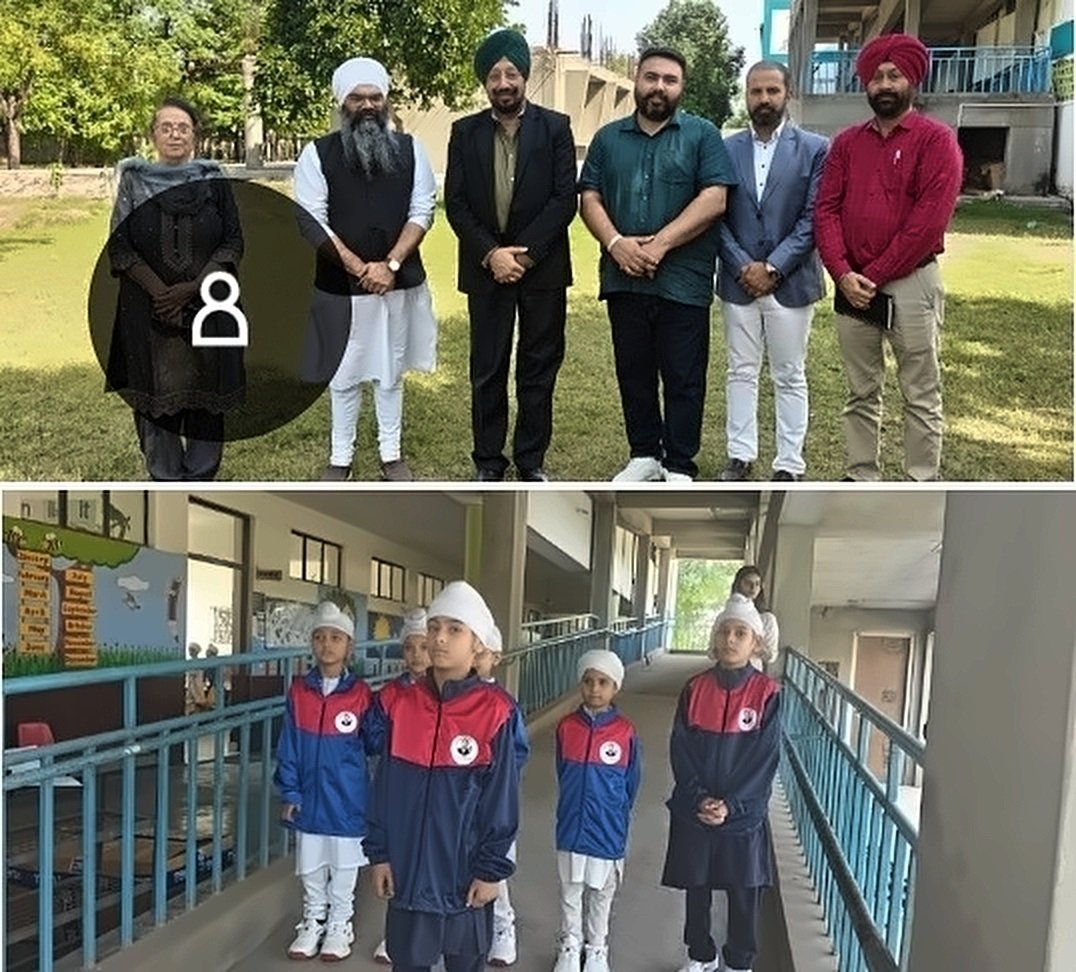
The Kalgidhar Society has expressed its heartfelt gratitude to the Vivek Chadha Foundation for its thoughtful support towards nurturing rural sporting talent at Akal Academy Manoli Surat. The appreciation highlights how the sports kits are encouraging students to participate with greater confidence, enthusiasm and belief in their potential. Read the full LinkedIn post to discover the impact of this generous contribution and join us in thanking the Vivek Chadha Foundation for helping rural talent find its wings.